
 Log in
Infrastructure, Hosting & CDN Insights

Sort by
Category
Product

ArticlePublic Cloud
OpenStack vs VMware: A Cost-Effective Alternative to Sky-High Licensing Bills
An OpenStack-based cloud can lower the total cost of ownership (TCO) of a VMware environment by reducing software spending and changing how infrastructure and platform operations are purchased. The financial benefit depends on what the business spends over several years, including migration, support, and the work its engineers continue to handle. VMware’s licensing shake-up has […]

Article
Two Critical PHP Vulnerabilities: What We Know and What’s Available
By now, you’ve probably heard about the two critical PHP vulnerabilities announced this week. The fixes came out on October 21. The technical details are public too. When PHP first announced the release, the full details were still under wraps. The published advisories now explain how the vulnerabilities work. They also identify the releases that […]

ArticleBare Metal
Stop Paying for Hype. When Older Servers Make Much Better Business Sense
Most enterprise on-premises servers operate at just 12% to 18% of capacity on average. Buying new-generation compute platforms for routine workloads often delivers diminishing returns. Certified previous-generation hardware can meet those needs at a much lower CapEx – sometimes up to 70% lower. At the same time, enterprise hardware spending is rising far faster than […]

ArticleCDN
CDN Trends in 2026: Resilience, HTTP/3, and Global Pricing
What is actually changing in content delivery, edge infrastructure, and CDN security? In 2026, content delivery networks have become security platforms, compute environments, and the primary deployment vehicles for next-generation web protocols, and the most important trends center on cost control, delivery resilience, protocol modernization, and the growing importance of origin infrastructure in determining total […]

ArticleCDN
Video Hotlink Protection: How to Stop Paying for Someone Else’s Traffic
Video hotlink protection is a CDN-level control that blocks third-party websites from using your direct video URLs – MP4 files, HLS playlists, DASH manifests – to stream your content through their own pages. When it’s in place, every playback request is validated before delivery. When it isn’t, anyone with your video URL can embed it […]
ArticlePrivate Cloud
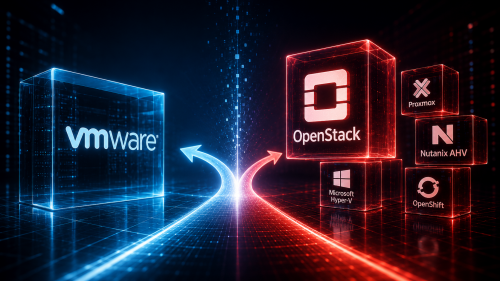
The Top 5 VMware Alternatives in 2026
When Broadcom acquired VMware in a $61 billion deal in November 2023, it moved customers from perpetual licences to mandatory subscription bundles, eliminated legacy discounts, and introduced 72-core minimum requirements for vSphere. Annual VMware costs have risen 8 to 15 times for some organizations. As a result, Gartner says that 74% of IT leaders are […]

ArticleCDN
Why CDN Egress Fees Explode at Scale: Flat-Rate Bandwidth vs Per-GB Pricing for Streaming Platforms
Per-GB CDN pricing is the default model for many streaming platforms and one of the fastest-growing infrastructure costs as audiences scale. At 10,000 concurrent viewers, even a moderately compressed 1080p stream can create tens of Gbps of sustained outbound traffic. On Amazon CloudFront, for example, North American data transfer is priced at $0.085 per GB […]
ArticleVirtual Machines
How to Maximize Virtual Machine Performance
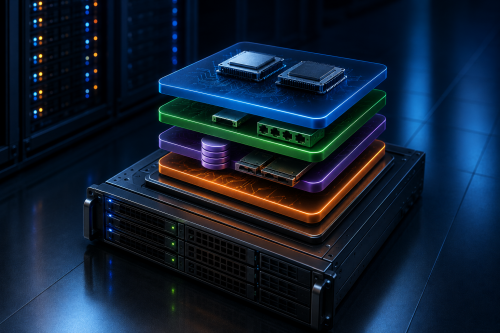
Maximizing a virtual machine’s performance depends almost entirely on how the underlying infrastructure is set up. Get the configuration right, and a KVM virtual machine can run at 89 to 91% of the speed of the physical server it sits on. Get it wrong, and that same hardware can deliver 25 to 50% less performance […]

ArticlePrivate Cloud
The top 7 Google Cloud Alternatives in 2026
Market trends indicate that hyperscalers such as GCP are no longer the default infrastructure choice for enterprise teams. Despite providing extensive network depth and coverage, these platforms are often uneconomical for certain workloads. A Barclays survey found that 83% of CIOs planned to move at least some workloads off public cloud. This article explains when […]