Log in


AI summary
Overview: The article addresses challenges of launching video services in Japan, where IPv6-based access models such as v6 Plus, DS‑Lite, and MAP‑E are widespread and overall IPv6 adoption exceeds 40%. It argues that conventional CDN approaches—which assume IPv4 paths, partial IPv6 support, or client-side fallback—frequently fail in this environment, causing broken sessions, incorrect client addressing, and inconsistent delivery across mobile and home networks.
Core message: Reliable video delivery in Japan requires an IPv6-native, ISP-aware CDN architecture with full dual‑stack or IPv6‑first PoP coverage, correct RFC‑compliant handling of HTTP Range requests, support for HTTP/2 and HTTP/3, deterministic routing and transport tuning, and origin protection. Neglecting these requirements leads to playback interruptions, unpredictable performance during network transitions, and operational or cost penalties at scale.
Launching a video platform in Japan? Your biggest challenge isn’t bandwidth, it’s IPv6. With over 40% IPv6 adoption and widespread use of v6 Plus, DS-Lite, and MAP-E, traditional CDN strategies often fail in real-world conditions. This article explains how to build a CDN architecture that ensures stable MP4 delivery, proper Range request handling, and consistent performance across Japanese mobile and home networks. Learn what most providers overlook and how to avoid costly post-launch issues.
CDN for Japan: Ensuring Reliable IPv6 Video Delivery on v6 Plus, DS-Lite, and MAP-E Networks
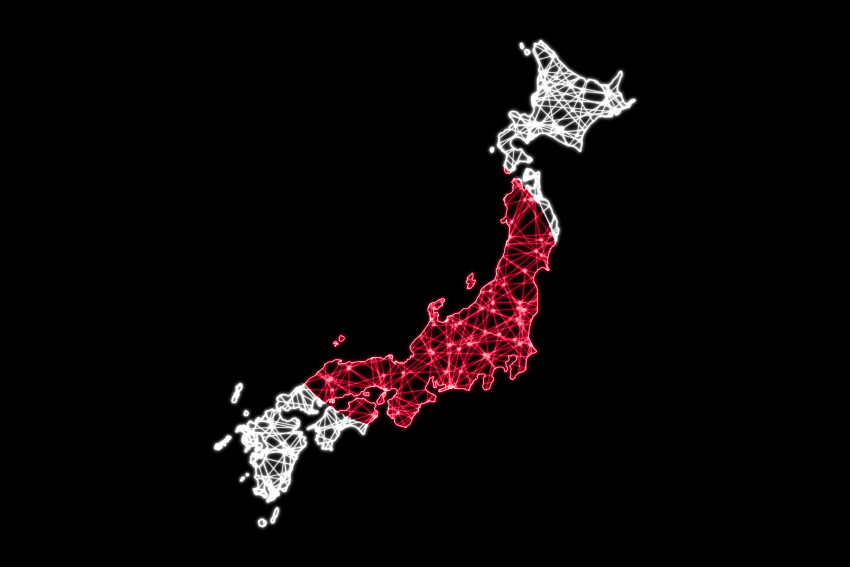
Japan presents one of the most advanced yet complex environments for video delivery. While global CDN strategies often focus on latency reduction and edge caching, Japan’s network architecture introduces an additional layer of complexity: widespread IPv6-based access models such as v6 Plus, DS-Lite, and MAP-E.
According to the Google IPv6 Statistics, IPv6 adoption in Japan consistently exceeds 40%, placing it among the leading countries globally. In some ISP segments, particularly fiber-to-the-home (FTTH), IPv6-based connectivity is the default rather than the exception.
For video platforms targeting Japanese mobile and residential users, this means one thing:
if your CDN is not truly IPv6-native, your delivery will often break silently.
Why Japan’s IPv6 Environment Is Different
Unlike many regions where IPv6 is layered on top of IPv4, Japanese ISPs widely deploy IPv4-over-IPv6 transition mechanisms:
| Technology | Description | Impact on CDN |
| DS-Lite (Dual-Stack Lite) | IPv4 traffic tunneled over IPv6 to carrier-grade NAT (CGN) | Breaks assumptions about client IP visibility |
| MAP-E (Mapping of Address and Port with Encapsulation) | Stateless IPv4 sharing over IPv6 | Requires correct port and routing handling |
| v6 Plus | Commercial implementation combining IPoE + MAP-E | Dominant in Japanese consumer networks |
These technologies are widely used by major Japanese ISPs such as NTT Communications and KDDI.
Stat insight:
Japan’s Ministry of Internal Affairs and Communications reports that IPoE-based IPv6 services (including v6 Plus) are used by a majority of new FTTH subscribers, due to better congestion avoidance compared to PPPoE.
Key Challenges for Video CDN Delivery
1. IPv6 Must Be Native, Not Optional
Many CDNs advertise IPv6 support, but in practice:
- IPv6 is enabled only on selected PoPs
- Traffic falls back to IPv4
- Routing is inconsistent
In Japan, fallback mechanisms do not work reliably, especially in DS-Lite and MAP-E environments.
Requirement:
- Full dual-stack or IPv6-first delivery on all Japanese PoPs
- No dependency on client-side fallback logic
2. Range Requests Over IPv6
Video delivery depends on HTTP 206 Partial Content for:
- Seeking
- Buffering
- Adaptive playback
Improper handling of IPv6 leads to:
- Playback stalls
- Restarted downloads
- Increased bandwidth costs
3. Mobile Network Variability
Japan has one of the most advanced mobile infrastructures globally:
- Over 90% 4G coverage nationwide
- Rapid 5G expansion led by operators like NTT Docomo
However:
- Network switching (Wi-Fi ↔ LTE/5G)
- IPv6 tunneling behavior
- Carrier NAT
Create unstable session conditions unless the CDN handles transport correctly.
4. Protocol Requirements (HTTP/2 and HTTP/3)
Modern mobile delivery depends on:
- HTTP/2 → multiplexing
- HTTP/3 (QUIC) → reduced latency and improved loss recovery
| Component | Requirement | Why It Matters |
| Japanese PoPs | Tokyo + Osaka minimum | Reduces RTT and avoids cross-region routing |
| IPv6 Coverage | 100% production-grade | No fallback dependency |
| Routing Control | ISP-aware optimization | Critical for v6 Plus / MAP-E |
| Range Request Handling | Full RFC-compliant | Enables smooth playback |
| Protocol Support | HTTP/2 + HTTP/3 | Mobile performance |
| Origin Shield | Regional shielding | Protects the origin during spikes |
Beyond Standard CDN Advice
Most CDN guides recommend:
- More PoPs
- Adaptive Bitrate Streaming (ABR)
- Long TTL caching
While valid, these are insufficient for Japan.
What Actually Matters
- End-to-End IPv6 Path Integrity
- No broken segments between edge and origin
- Consistent routing across ISPs
- ISP-Level Traffic Engineering
- Awareness of Japanese access networks
- Optimization for IPoE-based routing
- Deterministic Performance
- No “black box” CDN behavior
- Predictable latency and throughput
- Transport-Layer Stability
- Correct TCP/QUIC tuning
- Stable session persistence across network transitions
Content Policy Considerations
For video platforms distributing adult / NSFW content, CDN selection must include:
- Explicit allowance in Terms of Service
- No traffic throttling based on content type
- Stable delivery under high concurrency
Many global CDNs impose restrictions or apply soft limits, which can lead to unexpected service degradation after launch.
Pricing Considerations for High-Volume Video
At scale, pricing models vary significantly:
| Model | Typical Issue |
| Per-GB billing | Costs increase linearly with traffic |
| Tiered pricing | Hidden thresholds and overage fees |
| Blended CDN models | Limited transparency |
Industry benchmark:
High-volume video platforms (100+ TB/month) often achieve 30–60% cost reduction when combining:
- Dedicated infrastructure
- CDN edge delivery
- Optimized caching strategies
Advanced Hosting Approach
At Advanced Hosting, we approach Japan not as a “region,” but as a network-specific environment.
“Reliable delivery in Japan requires more than edge presence it requires control over routing, IPv6 behavior, and infrastructure at every layer.”
What We Provide
- Full IPv6 support across all delivery nodes
- High-throughput Video CDN
- Anycast routing with ISP-aware optimization
- Dedicated + CDN hybrid architectures
- Explicit support for high-load video platforms
- Direct engineering support for network-level issues
Japan’s internet ecosystem demands a fundamentally different CDN strategy.
Success depends not on generic features, but on:
- Transport-layer correctness
- Predictable infrastructure behavior
Ignoring these factors leads to:
- Playback failures
- Increased buffering
- Post-launch instability
Planning to launch a video platform in Japan?
Ensure your infrastructure is ready for real-world network conditions — not just lab-tested performance.
Contact Advanced Hosting to design a CDN architecture tailored for IPv6-first environments and high-volume video delivery.
Why is IPv6 critical for video delivery in Japan?
Japan has one of the highest IPv6 adoption rates globally. According to Google IPv6 Statistics, IPv6 usage in Japan exceeds 40%, and in many FTTH networks, IPv6 is the default.
Most Japanese ISPs use IPv4-over-IPv6 technologies like v6 Plus, DS-Lite, and MAP-E. If your CDN does not support IPv6 natively, users may experience:
- Failed connections
- Increased latency
- Broken video playback
What happens if a CDN relies on IPv4 fallback?
Fallback mechanisms often fail in Japanese networks because:
- IPv4 traffic is tunneled through IPv6 (DS-Lite / MAP-E)
- Carrier-grade NAT introduces instability
- Routing paths become non-deterministic
As a result, fallback can lead to:
- Higher packet loss
- Slower startup times
- Inconsistent buffering behavior
Best practice: Use a CDN with full IPv6 support on all PoPs in Japan, without relying on fallback.
Do I need both Tokyo and Osaka PoPs?
Yes. At a minimum, a CDN should have Points of Presence (PoPs) in both Tokyo and Osaka.
This ensures:
- Lower latency across eastern and western Japan
- Reduced congestion during peak hours
- Better routing for regional ISPs
Many enterprise CDNs deploy additional regional nodes, but Tokyo and Osaka are the baseline requirements.
Why are HTTP range requests (206 Partial Content) important?
Range requests allow video players to:
- Seek specific timestamps
- Buffer content progressively
- Avoid re-downloading entire files
Without proper support (especially over IPv6), users may experience:
- Playback resets
- Long buffering times
- Increased bandwidth usage
Does HTTP/3 really improve video delivery?
Yes. HTTP/3 (based on QUIC) improves:
- Connection establishment time
- Performance over unstable mobile networks
- Packet loss recovery
What video formats work best for Japanese mobile users?
For maximum compatibility:
- MP4 (H.264) → universal support (Safari, Chrome, Android, iOS)
- HLS (HTTP Live Streaming) → adaptive bitrate for unstable networks
Even when delivering MP4, using CDN-compatible segmentation and caching strategies is essential.
How do v6 Plus, DS-Lite, and MAP-E affect CDN performance?
These technologies:
- Tunnel IPv4 over IPv6
- Use shared IP addressing
- Depend heavily on ISP routing
Impact on CDN:
- Reduced visibility of client IPs
- Complex routing paths
- Potential performance inconsistencies
A capable CDN must:
- Be IPv6-native
- Optimize routing at the ISP level
- Maintain session stability across transitions
Is adult (NSFW) video content allowed on CDNs?
It depends on the provider.
Many global CDNs:
- Restrict or prohibit adult content
- Apply soft throttling under high load
Before choosing a CDN, confirm:
- Explicit allowance in Terms of Service
- No hidden traffic limitations
What are the common mistakes when launching in Japan?
- Assuming IPv4 delivery is sufficient
- Choosing a CDN without local network expertise
- Ignoring ISP-specific routing behavior
- Not testing under real IPv6 conditions
- Relying only on PoP count instead of routing quality
How can I test CDN performance in Japan before launch?
Recommended approach:
- Use real devices on Japanese ISPs (not VPNs)
- Test IPv6 connectivity explicitly
- Validate:
- HTTP 200 / 206 responses
- Playback start time
- Rebuffering rate
- Monitor performance across Wi-Fi and mobile networks
What traffic levels require a custom CDN setup?
If your platform exceeds:
- 50–100 TB/month → optimization becomes necessary
- 100+ TB/month → hybrid CDN + dedicated infrastructure is recommended
- 500 TB–1 PB/month → fully optimized architecture significantly reduces costs